Skill before glory
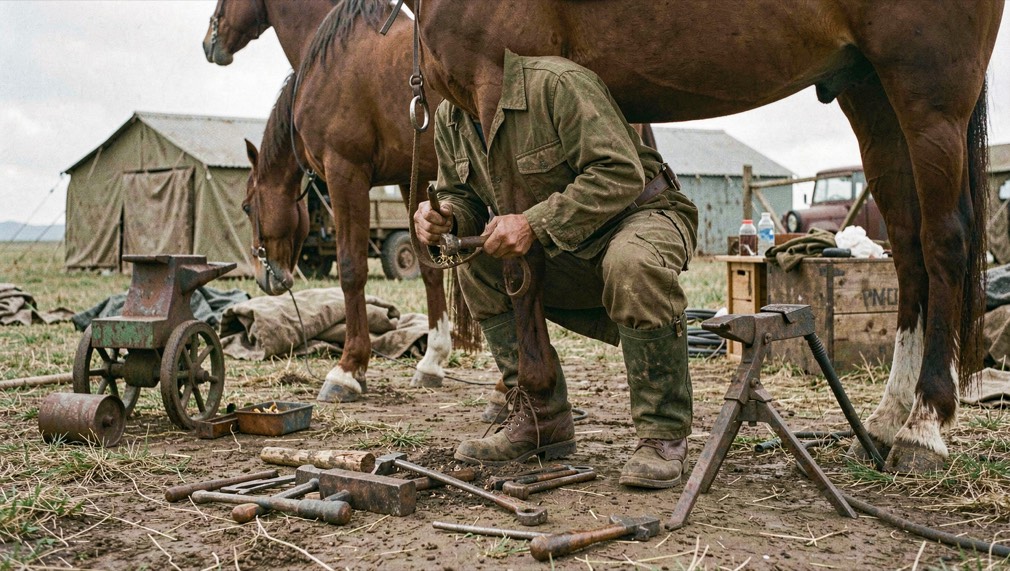
His trade test recorded shoeing, rasping and judging lameness. In France he worked in a forge section, treating thrush, cracked hooves and injuries from wire. A lame horse could delay water, rations or ammunition.
His work was dangerous in a different way from infantry service. Horses panicked under shellfire, and hot metal, kicking animals and muddy ground caused constant minor injuries.
Animals and emotion
Letters mention a particular mare by temperament rather than name. Such detail suggests attachment, but also professional attention to animals that could be managed.
After war
He returned to civilian shoeing but treated horses with damaged nerves and stiff joints. Wartime experience changed his trade as well as his body.
Where to look next
Battalion diaries set the dates of movement, while home front tribunals show why farm horses were contested.