Safe subjects
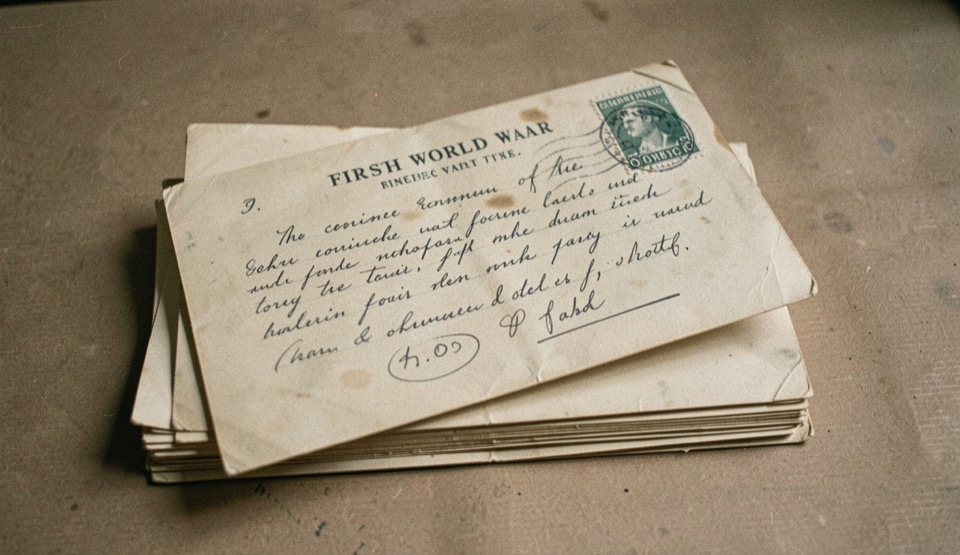
One letter describes mud, boots and parcels but says nothing about a recent attack. Another thanks a sister for socks and asks after a cow. These details were safe, personal and useful.
Censorship did not eliminate feeling; it redirected it. Men wrote about weather, food and work because those subjects carried emotional weight without breaking rules.
Reading silence
Gaps can indicate censorship, self-protection or lost pages. Do not assume that absence of complaint means contentment.
Parcels as language
Requests for soap, tobacco or sweets often expressed need indirectly. Families responded with practical care when direct discussion was impossible.
Where to look next
Newspaper criticism and diary methods help test letters against official records.