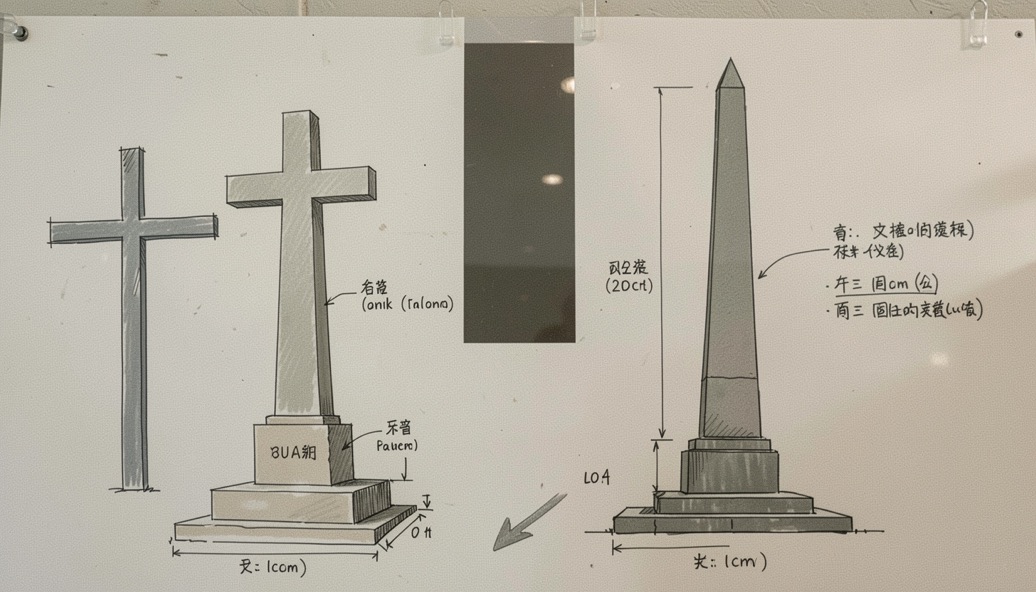
Two designs, many meanings
A cross promised Christian sacrifice but worried some ratepayers who preferred a secular obelisk. Supporters answered that the cross spoke to bereaved parents more directly than any classical column.
Cost entered quietly. An obelisk required less figurative carving and less specialised maintenance. Yet minutes rarely admitted that money decided the matter; they spoke of suitability.
Setting changed meaning
A market-place site made remembrance part of ordinary traffic. A churchyard site would have increased quiet but narrowed attendance. Choosing the street kept the memorial public and contested.
Compromise in detail
The final design used plain blocks with restrained Christian symbols. This allowed different readers to emphasise duty, grief or civic honour.
Where to look next
Dedication photographs show how the compromise worked in practice, while stone studies reveal workshop decisions.