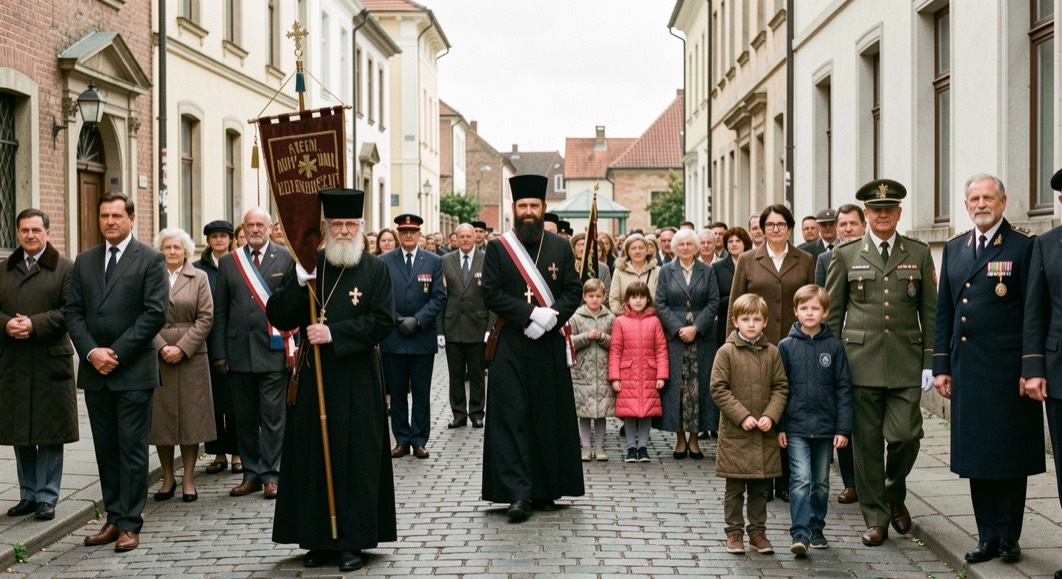
Order in the procession
The photograph shows clergy and civic officers immediately behind the standard bearers, then relatives, then schoolchildren. That order was not accidental. It placed religious authority and municipal government at the centre while making bereaved families visible without requiring them to speak.
Newspaper reports praised discipline and sacrifice but said little about the war’s causes. The ceremony therefore created a public language for grief that avoided political argument.
Silences and omissions
Women who organised the fund appear only as a collective. Their individual contributions survive in receipts, not speeches. This does not mean they were absent from decision-making; it means public recognition followed gendered conventions.
Weather, sound and memory
Reports mention cold wind and a short address. Those details matter. A brief outdoor ceremony encouraged disciplined silence rather than individual lament, and the photograph’s closed faces may reflect weather as much as emotion.
Where to look next
The inscription study shows how wording continued these choices, while home front records identify fund organisers.